
Anúncios
For post-graduates completing advanced degrees in engineering, the transition from academic excellence to professional impact represents a critical juncture. The question is no longer simply “what can I build?” but rather “how do I position myself to lead, to innovate, and to deliver value in an increasingly complex technical landscape?”
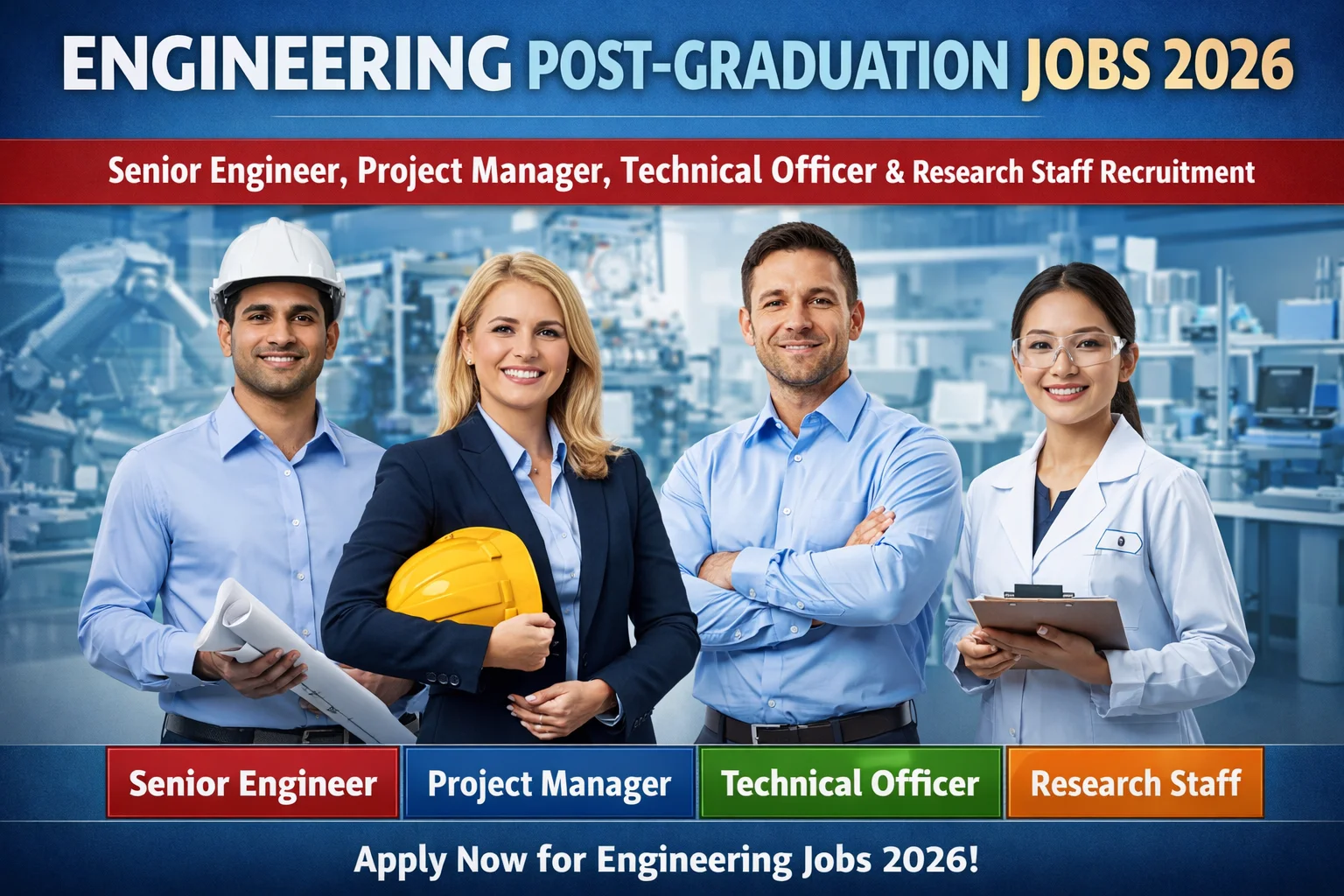
As we move through 2026, engineering post-graduation jobs have evolved to demand more than technical proficiency. Organizations are seeking professionals who can bridge the gap between deep domain expertise and strategic execution. Whether your ambitions lie in becoming a Senior Engineer, a Project Manager, a Technical Officer, or a Research Staff member, success in this environment requires a blueprint that extends far beyond your academic credentials.
Anúncios
Understanding the Engineering Career Landscape
The engineering sector encompasses a vast array of industries—from infrastructure and manufacturing to technology, energy, and research. For post-graduates, the roles available reflect the increasing complexity of modern engineering challenges. Understanding the distinct nature of each role will help you align your skills and aspirations with the right opportunities.
Senior Engineer
The Senior Engineer role represents a step beyond entry-level technical positions. It is a role that assumes not only technical competence but also the ability to work independently, mentor junior team members, and contribute to technical decision-making. Senior Engineers are expected to take ownership of complex design elements, troubleshoot issues that arise during implementation, and ensure that engineering outputs meet rigorous standards for quality and safety.
In 2026, employers are looking for Senior Engineers who combine specialized technical knowledge with systems thinking. You are no longer designing a single component in isolation; you are understanding how that component interacts with broader systems, how manufacturing constraints affect your design choices, and how your work aligns with project timelines and budgets. Post-graduates with strong theoretical foundations and practical experience gained through internships or research projects are particularly well-positioned for these roles.
Project Manager
Engineering Project Management has emerged as a discipline in its own right. Project Managers are responsible for the successful delivery of engineering initiatives—bridging technical execution with stakeholder management, resource allocation, and timeline adherence. This role requires the ability to translate technical requirements into actionable plans, to anticipate risks before they become problems, and to communicate effectively with clients, senior leadership, and technical teams.
For post-graduates, moving into Project Management often begins with roles that combine technical responsibility with coordination duties. Demonstrating organizational skills, clear communication, and the ability to manage competing priorities will set you apart. In 2026, employers value Project Managers who understand the technical depth of the projects they oversee while possessing the soft skills necessary to guide teams through uncertainty.
Technical Officer
Technical Officers serve as specialists who ensure that engineering processes, standards, and regulations are upheld across organizations. Depending on the industry, this role may involve quality assurance, compliance monitoring, technical documentation, or serving as a liaison between engineering teams and regulatory bodies. Technical Officers are often the keepers of institutional knowledge—the individuals who ensure that engineering work meets safety standards, environmental regulations, and industry best practices.
This role appeals to post-graduates who value precision, methodical work, and the opportunity to develop deep expertise in a specific domain. It offers a pathway to senior technical leadership for those who prefer to remain close to the technical details of engineering work rather than moving into general management.
Research Staff
For post-graduates with a passion for innovation and discovery, research roles offer the opportunity to push the boundaries of engineering knowledge. Research Staff positions—spanning research engineers, associates, and fellows—exist in corporate research and development divisions, government laboratories, and academic research centers. These roles involve designing experiments, developing prototypes, publishing findings, and contributing to the intellectual property portfolios of their organizations.
In 2026, research roles are increasingly interdisciplinary. The most impactful engineering research draws on insights from materials science, data analytics, sustainability principles, and emerging technologies like artificial intelligence and advanced manufacturing. Post-graduates who have already contributed to research during their master’s or doctoral programs—through publications, conference presentations, or significant project work—will find themselves competitive for these positions.
The Competencies That Define Success
Your postgraduate engineering degree has provided you with advanced technical knowledge. But succeeding in engineering jobs requires a broader set of competencies that you must actively develop and demonstrate.
Technical Depth and Breadth
Employers expect post-graduates to bring deep expertise in their specialized area—whether structural engineering, software systems, chemical processes, or electrical design. However, the most valuable engineers also possess breadth. They understand how their specialization fits into larger systems, they can communicate with colleagues from other disciplines, and they can adapt their knowledge to new challenges. During interviews and in your early career, emphasize both your core competencies and your ability to learn and apply new concepts.
Systems Thinking
Modern engineering problems rarely have simple solutions. A design change in one area may have ripple effects across manufacturing, maintenance, user experience, and environmental impact. Systems thinking—the ability to understand and optimize complex interconnected systems—is a hallmark of engineering maturity. In your applications and interviews, demonstrate that you consider the broader context of your work, not just the immediate technical challenge.
Communication and Collaboration
Engineers do not work in isolation. You will collaborate with designers, technicians, clients, regulators, and colleagues from other engineering disciplines. Your ability to explain technical concepts to non-technical audiences, to document your work clearly, and to contribute constructively to team discussions will determine your effectiveness. Post-graduates who excel in communication often advance more quickly than those who rely solely on technical skill.
Project and Risk Awareness
Engineering projects involve uncertainty. Deadlines shift, materials become unavailable, and unforeseen technical challenges arise. Employers value engineers who anticipate risks, propose mitigation strategies, and adapt when plans change. During interviews, be prepared to discuss how you have navigated uncertainty in past projects—whether in academic research, internships, or personal engineering endeavors.
Navigating Recruitment in 2026
The recruitment process for engineering post-graduation jobs has become increasingly rigorous. Employers are looking for candidates who can demonstrate readiness to contribute from the outset.
For Senior Engineer Roles
Your application should emphasize depth in your technical specialization. Provide specific examples of complex problems you have solved, designs you have implemented, or systems you have optimized. Include details about software proficiency, technical standards you are familiar with, and any relevant certifications. Technical interviews are common for these roles; be prepared to work through problems aloud, demonstrating not just your answer but your approach to problem-solving.
For Project Manager Roles
Your application should highlight organizational and leadership experiences. Even if you have not held formal management roles, you can discuss how you have coordinated teams, managed timelines, or led initiatives during your postgraduate studies. Be prepared for behavioral interviews that explore how you handle competing priorities, communicate with stakeholders, and navigate setbacks.
For Technical Officer Roles
Emphasize your attention to detail, your familiarity with standards and regulations, and your methodical approach to work. If you have experience with quality management systems, technical documentation, or compliance processes, highlight it prominently. Employers in these roles value reliability and precision.
For Research Staff Roles
Your application should include a strong emphasis on your research contributions. List publications, presentations, and significant projects. Be prepared to discuss your research methodology, the questions that drive your work, and how your findings contribute to broader engineering knowledge. Research roles often involve portfolio reviews and presentations as part of the interview process.
Building a Sustainable Engineering Career
Engineering offers the opportunity for lifelong learning and growth. The field evolves rapidly, and staying current requires intentional effort. Pursue professional certifications relevant to your domain. Engage with professional societies and attend industry conferences. Seek mentors who can offer guidance on technical and career development. And perhaps most importantly, cultivate a mindset of continuous improvement—approaching each project as an opportunity to refine your skills and expand your knowledge.
Your postgraduate engineering degree has prepared you to think critically, solve complex problems, and contribute to projects that matter. The engineering sector in 2026 needs professionals who can bring not only technical excellence but also leadership, collaboration, and strategic thinking to their work. Whether you pursue a path as a Senior Engineer, Project Manager, Technical Officer, or Research Staff member, you are entering a field where your skills will be valued and your growth will be supported.